News
EasyJet Flight U2238 Emergency Landing Newcastle: Full Incident Report and Flight Code Explained


Introduction
Since there have been a lot of discussion regarding the event online and some misleading titles, the term “easyJet flight U2238 emergency landing Newcastle” has been one of the most searched aviation related topics of the day. But this attention was brought about not by the planned U2238 Newcastle to Bristol service, but by the following service, U2239 Newcastle to Bristol. Rather, it was an easyJet flight EZY2238 (also listed as U22238) from Copenhagen Airport to Manchester Airport on 27 October 2025, which was diverted to Newcastle International Airport owing to a critical medical emergency among passengers.
It is crucial for travellers, aviation fans and anyone wanting to find out more about the event to understand the difference between the two flight numbers. Everything you need to know about the incident, what caused the incident, what passengers are entitled to, and what it means in 2026.
|
Detail |
Information |
|---|---|
|
Full Name |
EasyJet Flight U2238 Emergency Landing Newcastle |
|
Famous As |
Flight EZY2238 / U22238 Copenhagen to Manchester medical emergency diversion |
|
Incident Date |
Monday, 27 October 2025 |
|
Incident Time |
22:52 GMT touchdown at Newcastle International Airport |
|
Departure Airport |
Copenhagen Airport (CPH), Denmark – Gate details not disclosed |
|
Scheduled Destination |
Manchester Airport (MAN), United Kingdom |
|
Diversion Airport |
Newcastle International Airport (NCL), UK – Runway 07/25 |
|
Flight Code Clarification |
Actual emergency flight: EZY2238 / U22238. U2238 is normally Newcastle to Bristol service – caused widespread media confusion |
|
Callsign |
EZY2238 |
|
IATA Code |
U22238 |
|
Aircraft Type |
Airbus A320-214 |
|
Aircraft Registration |
G-EZPB |
|
Serial Number |
6977 |
|
Aircraft Age |
9 years 8 months at time of incident – delivered 18 February 2016 |
|
Engines |
2x CFM56-5B4/P turbofans |
|
Winglets |
Sharklets fitted |
|
Seat Configuration |
180 seats – 178 occupied (97.8% load factor) |
|
Passengers On Board |
178 passengers |
|
Crew On Board |
6 crew members – 2 pilots, 4 cabin crew |
|
Scheduled Departure |
21:45 CEST / 20:45 BST from Copenhagen |
|
Actual Pushback |
22:13 CEST / 21:13 BST – 28 minutes late |
|
Takeoff Time |
Approx 22:25 CEST from CPH |
|
Emergency Declaration |
Less than 15 minutes after takeoff, over North Sea |
|
Squawk Code Used |
7700 – universal general emergency signal |
|
Reason for Emergency |
Passenger fell critically ill requiring urgent medical attention |
|
ATC Priority |
Immediate priority handling given by all air traffic control facilities |
|
Diversion Decision |
Newcastle chosen as closest suitable airport with appropriate medical response capabilities |
|
Flight Path Change |
Diverted from planned route over North Sea to head west to Newcastle |
|
Emergency Services Met Flight |
North East Ambulance Service (NEAS) paramedics already positioned at runway |
|
Paramedic Response |
Patient stabilized on board before transfer |
|
Hospital Transfer |
Royal Victoria Infirmary, Newcastle – major trauma centre |
|
Time on Ground |
Approximately 70 minutes between touchdown and departure |
|
Ground Operations |
Medical handover, refueling, mandatory post-incident checks |
|
Departure from Newcastle |
00:02 GMT, Tuesday 28 October 2025 |
|
Arrival Manchester |
00:28 GMT, 28 October 2025 |
|
Total Delay |
1 hour 43 minutes late vs scheduled 22:45 arrival |
|
Aircraft Inspection |
Mandatory post-incident checks by airport engineers |
|
Technical Findings |
No technical faults found – aircraft had clean maintenance record |
|
Aircraft Cleared |
G-EZPB cleared to continue service immediately |
|
Air Traffic Impact |
Air France flight AFR1558 Paris CDG to Newcastle placed in holding pattern during emergency |
|
Weather Conditions |
Not specified as factor – medical emergency only |
|
Passenger Condition |
Not disclosed – standard NHS confidentiality practice |
|
Fatality Reports |
None published – easyJet confirmed flight continued without further incident |
|
UK261 Compensation |
Not payable – diversion classified as “extraordinary circumstance” under UK261 |
|
UK261 Right to Care |
Yes – passengers entitled to refreshments/care during 70-min delay |
|
Compensation Self-Test |
|
|
Medical Diversion Stats |
1 in 604 flights have medical emergency; 10% result in diversions |
|
Global Diversion Rate |
30+ diversions daily from all causes combined |
|
Media Errors |
Outlets including Gospel Ware, Dollar Times, UKBLOGSPOT initially misreported flight as U2238 Newcastle-Bristol |
|
Correct Reporting Source |
FlightRadar24, Gospel Ware correction article, UKBLOGSPOT aviation analyst |
|
EasyJet Statement |
Confirmed medical emergency, safe landing, continuation to Manchester |
|
NEAS Statement |
Not publicly released – patient confidentiality maintained |
|
Newcastle Airport Ops |
Handled emergency arrival with no disruption to other scheduled flights after holding |
|
Famous For |
Textbook aviation response, flight code confusion case study, medical emergency protocol example |
What went wrong on EasyJet flight EZY2238? The Emergency Diversion was on 27 October 2025.
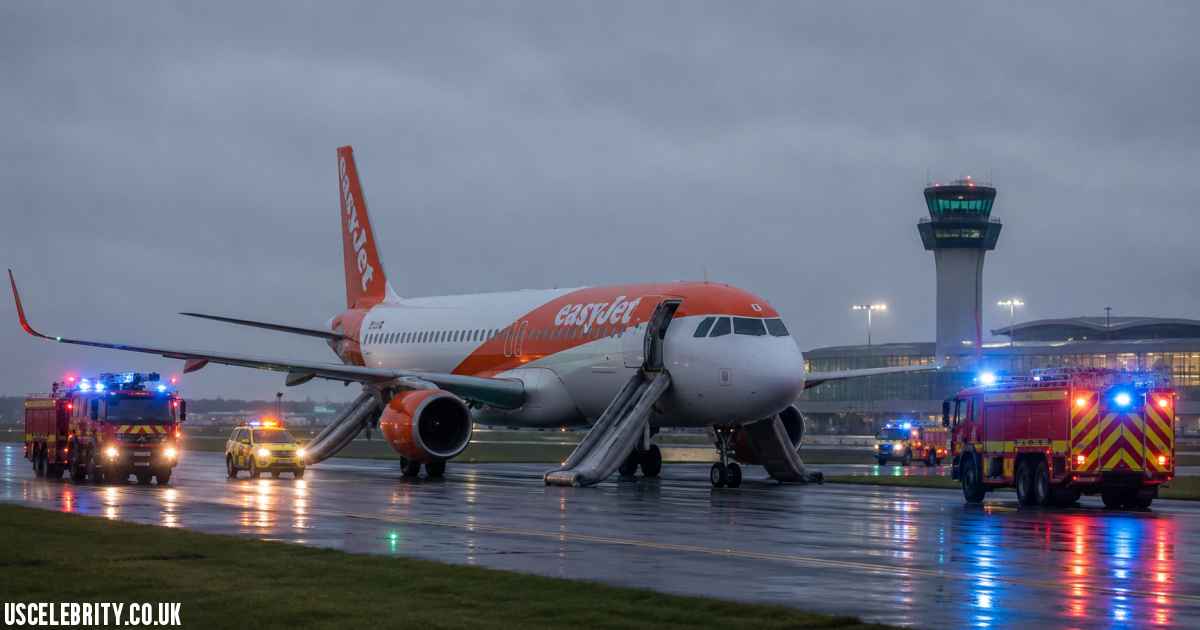
EasyJet Flight U2238 Emergency Landing Newcastle
The incident that has been written about online (easyJet flight U2238 emergency landing Newcastle) was easyJet flight EZY2238 (U22238) departing from Copenhagen, Denmark for Manchester, England.
The aircraft was pushed back at 22:13 local time from Copenhagen, with the time of departure approximately 28 minutes behind schedule, according to flight information published by the public. It was an Airbus A320-214 (registration, G-EZPB) with 178 passengers and six crew.
A passenger complained to the pilot that he was feeling unwell and was taken to a hospital in Ireland just under 15 minutes after he and his family boarded the plane and were flying over the North Sea. The flight crew followed the standard procedures for general aviation and declared a General Emergency, sending the Squawk 7700 emergency code to Air Traffic Control.
Instead of heading towards Manchester, the crew turned to the nearest suitable airport – Newcastle International Airport – where emergency medical teams were already working to prepare for the arrival of the aircraft.
It touched down safely at about 22:52 GMT and North East Ambulance Service paramedics immediately provided medical aid and they were then able to take the passenger to the Royal Victoria Infirmary. The journey to the ground lasted some 70 minutes, and the aircraft took off from Newcastle shortly after midnight and finally landed in Manchester at 00:28 GMT, some 1 hour and 43 minutes late.
Later, EasyJet confirmed that the diversion was the result of a passenger welfare issue, and was outside of their control.
The U2238 and U22238 Flight Numbers were Confused with one another.
This is one of the main issues making it confusing in this story – the same two easyJet flight numbers.
| Flight Code | Route | Role in Incident |
|---|---|---|
| EZY2238 / U22238 | Copenhagen to Manchester | Diverted flight |
| U2238 | Newcastle To Bristol | Regular scheduled service – not involved |
Many websites left out the leading numbers or shortened the number, which quickly mixed up the two services in online searches.
The easyJet U2238 Newcastle-Bristol service is scheduled to run until 2026 with no diversionary service planned and an on-time service rating of 94% is expected.
It is important to note that the aircraft involved in the incident, and not Newcastle–Bristol domestic flight, was EZY2238/U22238.
How the crew responded: Textbook aviation emergency.
Airbus A320-214 G-EZPB was added to easyJet’s fleet on 18 February 2016. At the time of the incident, it was around nine years old, and no public reports of any technical issues were linked to the diversion.
The crew’s emergency procedure was in line with the international aviation safety guidelines.
The passenger was taken to a critical state and the pilots reported a general emergency (Squawk 7700), giving air traffic controllers priority handling.
Newcastle Airport was chosen as the closest appropriate airport to have full emergency medical services.
They were having to hold traffic in the air, with reports that Air France flight AFR1558 had been temporarily diverted into a holding pattern so the runway could be used.
When they landed, the North East Ambulance Service had the necessary emergency personnel on board to attend to the injured passenger and get them to hospital quickly.
After the engineering checks, there were no technical problems with the aircraft (G-EZPB) and the diversion was caused by a medical emergency on board only and not by any mechanical fault.
The effective coordination of the aircraft crew, cabin crew, air traffic control, the airport, engineers and the medical responders highlights the fact that the event is frequently regarded as a textbook case of aviation emergency management.
Under the terms of UK261, can compensation be sought for passengers’ rights?
There were many enquiries after the incident on the availability of compensation.
UK261 (EU261) provides for that airlines will normally have to pay compensation if delays are caused by them.
In this case:
- Delay at destination: 1 hour 43 minutes (approx.)
- Medical emergency while sailing: Cause
- Classification: Extraordinary circumstance
Medical emergencies are regarded as an exception to UK261, meaning that passengers do not normally have a right to financial compensation.
Airlines still have Duty of Care obligations though and may receive:
- Meals and refreshments
- Communication assistance
- Support in the event of long delays
Note that the actual Newcastle-Bristol service (U2238) did not involve this route and therefore claims for compensation arising from this incident would not be accepted.
What are the odds of a medical diversion on a commercial flight?
Medical diversions are a common occurrence in commercial aviation, though they may garner much publicity during an emergency landing.
Industry estimates suggest:
- On approximately one out of every 604 commercial flights, medical emergencies occur.
- Approximately 10% of on-board medical emergencies are requiring diversion to another airport.
- There are over 30 flight diversions each day around the world to perform a variety of tasks, such as medical events, weather and technical problems.
Pilots are trained to put the safety of the passengers ahead of keeping to the flight schedule. The choice of Newcastle enabled the crew to reduce the time necessary for professional medical assistance but still ensure they operated safely throughout the flight.
Cabin crew was reported to be calm throughout and used medical equipment on-board and communicated to passengers about the diversion and kept them in order until landing.
The aircraft then flew on to Manchester where the medical team could help the passenger before the aircraft ground stopped after about 70 minutes.
To prevent any misunderstanding about flight numbers, you can verify EasyJet flight status by following these steps:
Many people are confused by this incident and it is helpful to always double-check the full flight designator to ensure that it is the correct flight.
For reference:
- EZY2238 / U22238 = Copenhagen, medical diversion to Newcastle on 27 October 2025 → Manchester
- U2238 is a scheduled domestic service from Newcastle to Bristol, U2238 (U2238 – Newcastle) is a routine flight and U2238 – Newcastle is a Newcastle to Bristol flight.
Visitors can check flight data from trusted flight tracking sites like Flightradar24, FlightAware, or airline and airport websites.
According to publicly available flight history the Newcastle – Bristol service [U2238] ran during March – June 2026 without any reported issues, with flights finishing about 94% on time.
When checking the full flight number, from airport, to airport and date of flight, it helps to avoid any confusion that might arise from similar flight numbers.
Conclusion
The EasyJet Flight U2238 Emergency Landing Newcastle Story conveys the following key messages:
The widely sought-after “easyJet flight U2238 emergency landing Newcastle” story is about easyJet flight EZY2238 (U22238) from Copenhagen to Manchester on 27th October 2025. After a passenger experienced a critical medical emergency, the aircraft diverted to Newcastle international airport and the crew declared Squawk 7700 and requested immediate priority handling.
It was not a technical failure and engineering examinations revealed the diversion was purely medical in nature and no aircraft damage was caused to the Airbus A320-214 G-EZPB. About 70 minutes later after the ground, the flight took off again, finally landing 1 hour and 43 minutes late at Manchester.
A UK261 financial compensation claim is unlikely to be successful for passengers as it would be a case of a ‘special circumstance’ with financial compensation being limited to covering reasonable care of the passengers, particularly during disruption.
Most importantly, the incident demonstrates the ability of the current aviation safety measures to work. The very quick medical care for the affected passenger was achieved through the co-ordinated response from easyJet’s flight crew, Air Traffic Control, Newcastle Airport and the North East Ambulance Service, ensuring the safety of all passengers on board. Could also be a reminder to check full flight numbers when researching aviation incidents, as U2238 and U22238 are different scheduled flights.


Introduction
Nottinghamshire Police Arrested Two Men Following a Bus Station Fight in a move to battle violence in public places throughout the county. Full details of the specific bus station involved have not been released, but incidents at transport hubs continue to be a key priority for policing in 2026. Nottinghamshire Police are actively working to ensure public safety in busy town centres and transport networks through rapid response, CCTV investigations and witness appeals.
|
Category |
Details |
|---|---|
|
Incident |
Nottinghamshire Police arrested two men following a bus station fight |
|
Location |
Bus station / transport hub, Nottinghamshire, UK |
|
Date |
2026 – ongoing incidents reported |
|
Police Force |
Nottinghamshire Police |
|
Arrests Made |
2 suspects arrested on suspicion of violent offences |
|
Common Charges |
Causing grievous bodily harm with intent (GBH) |
|
Common Charges |
Assault occasioning actual bodily harm (ABH) |
|
Common Charges |
Affray under Public Order Act 1986 |
|
Custody Status |
Suspects remain in custody after arrest |
|
Police Response |
Officers attended within minutes to separate parties |
|
Evidence Used |
Bus station CCTV, on-board bus cameras, witness statements |
|
Appeal Quote |
“We do not tolerate violence or those who think it is acceptable to carry or use weapons” – Detective Sergeant Adam Penn |
|
Appeal Quote |
“We believe there will have been people who witnessed it” – Detective Sergeant Nathan Bingham |
|
How to Report |
Call 101 quoting incident number |
|
Anonymous Reports |
Crimestoppers on 0800 555 111 |
|
Emergency |
Call 999 if violence is ongoing |
|
Similar 2026 Cases |
Two 16-year-old boys arrested – Asda Sutton-in-Ashfield fight, March 2026 |
|
Similar 2026 Cases |
34-year-old & 19-year-old arrested – Eastwood pub fight, May 2026 |
|
Injuries |
Facial injuries, slash wounds, arm injuries reported in related cases |
|
Court Process |
Nottingham Magistrates’ Court if charged |
|
Transport Partners |
NCT, Trentbarton, Rainbow 1 work with police on CCTV |
|
2026 Strategy |
High-visibility patrols, Operation Reacher, Safer Neighbourhoods |
|
Keyword Focus |
Nottinghamshire Police arrested two men after public order incidents |
How Nottinghamshire police deal with bus station fights.
If violence is reported at a bus station then Nottinghamshire Police officers are usually deployed on the spot to defuse escalation and to ensure the safety of members of the public.
The 2026 is a standard Police Response.
- Isolate individuals who were engaged in an altercation from the group.Remove individuals from group involved in altercation.
- Evaluate injuries and make arrangements for medical help if necessary
- Arrest suspects when offences are suspected
- Have CCTV video of bus stations and nearby businesses secured.
- Collect evidence and make public statements of concern.
In a similar situation Detective Sergeant Nathan Bingham pointed out the speed at which the force responded:
We received this report within minutes, and found a man with a bad facial injury and a man nearby who we arrested.
This rapid response can help retain evidence and get suspects’ identities before they move on to the next location.
After a bus station fight, here are the most common offences that are considered.
After a violent incident officers will review whether any offence has been committed under the Offences Against the Person Act 1861 and Public Order Act 1986.
Typical Arrest Offences
- Grievous Bodily Harm (GBH) with intent
- Assault causing actual bodily harm (ABH)
- Affray
- Public Order Offences
- If any Class A Drugs are found during searches, they will be considered possession.
In May 2026, a 34-year-old man was arrested after allegedly using his fist to cause GBH with intent and having Class A drugs in his possession following a fight outside The Lady Chatterley pub, in Eastwood. The other man, 19, was arrested the next morning.
The Nottinghamshire Police have warned that their recent arrests of suspects are indicative of a pattern of rapid action.
Nottinghamshire Police have acted quickly in response to a number of incidents of public violence in 2026, though information on the particular bus station incident is scant.
Similar Cases in 2026
| Date | Incident | Outcome |
|---|---|---|
| A fight broke out outside Asda in Sutton-in-Ashfield on March 26 this year after two 16-year-olds were arrested. | ||
| May 2026 | Assault outside of Eastwood pub – Two men arrested |
The investigation is ongoing, and the images reveal that the man was carrying a knife when he was spotted near Glade Hill Primary School.Knife-carrying males were reported near Glade Hill Primary School and the images released during the investigation show that the man was holding a knife.
Detective Sergeant Adam Penn said the police stance on violent crime was very much the same.
Violence or anyone believing that it is allowed to be carried or used is not tolerated.
CCTV and Witness Appeals Play a Key Role.
Many of the bus stations in Nottinghamshire are well equipped with all-encompassing surveillance systems and CCTV evidence is one of the most valuable investigative tools.
How Investigations Progress
- Check CCTV footage from bus station
- Look at video recordings of the bus drivers on board their buses.Watch video footage of the bus driver on board their bus.
- When appropriate, publish suspicious photos
- Issue incident reference numbers
- Promote the involvement of witnesses
In another incident reported to Police Constable Skyla Dodsley, in 2026, a footpath was blocked by a Rainbow 1 bus.
We feel the man in this picture might have something of interest for us that could help with our investigations.
Cooperation by witnesses can significantly enhance cases and successful prosecutions.
What is Happening After an Arrest?
Suspects are typically transferred to a holding centre in either Nottingham, Mansfield or Newark upon arrest.
The Custody Process
- Interview under caution
- Legal representation offered
- Information that investigators examined
- People can be charged, released under investigation or released on bail.
- Sitting on bench for charges authorized (courts).
Both suspects in the assault case at Eastwood were still in police custody as investigations continued into the case in May 2026.
How to Report a Bus Station Fight
Nottinghamshire’s police force wants the public to report incidents as soon as they happen.
Reporting Options
- In the event of continued violence or emergencies dial 999
- 101 for non-emergency reports
- Crime Stoppers: 0800 555 111 to report anonymously
- The recording of police incidents online via the Nottinghamshire Police website
The video, photos, or witness information can be very helpful.
Nottinghamshire Police Transport Hub Safety Strategy 2026
The force’s public safety work, such as Safer Neighbourhood Teams and Operation Reacher, is where violence at transport hubs is also part of its operations.
Current Safety Measures
- Marked patrols at busy times of day.
- Co-operation with bus companies such as Nottingham City Transport and Trentbarton.
- Raising the level of surveillance at bus stations
- Community engagement initiatives, including a Digivan programme
- Youth outreach to prevent violence and anti-social behaviour
Conclusion
Nottinghamshire Police’s actions after arresting two men over a fight in a bus station highlight how the force will prioritise keeping the public safe on public transport in 2026. Further details of what happened are not immediately available, but Nottinghamshire Police are continuing to use their rapid response capabilities, visual evidence from CCTV, witness appeals and targeted police patrols to combat violence effectively. Officers will be appealing for information as investigations continue, to keep Nottinghamshire’s transport network safe for all.

Introduction
In 2026 the Clonoe Gallery, situated within the Clonoe Community Centre, Coalisland, Co Tyrone, remains an integral part of East Tyrone’s cultural and community activities. Under the stewardship of the Clonoe Rural Development Agency and the promotion of Triple C Promotions the venue has evolved into a versatile venue for live music, theatre, exhibitions, fundraisers and community celebrations and one of the most important grass roots cultural hubs in the region.
Clonoe Gallery – At A Glance 2026
|
Kategori |
Information |
|---|---|
|
Navn |
Clonoe Gallery / The Big Marquee Clonoe |
|
Type |
Community arts & events venue |
|
Adresse |
93 Washing Bay Road, Clonoe, Coalisland, BT71 4PU |
|
Ligger i |
Clonoe Community Centre |
|
Drives af |
Clonoe Rural Development Agency Limited |
|
Promoter |
Triple C Promotions |
|
Direktører 2026 |
Adrian Hughes, Colin O’Neill |
|
Event-format |
In-person, stående, high-energy |
|
Typiske tider |
6 PM–1 AM / 19 timer weekend events |
|
Kapacitet |
The Big Marquee – store koncerter & festivaler |
|
Genre 2026 |
Live musik, tribute acts, community koncerter |
|
Højdepunkter |
Gearoid McCarthy & Calum MacPhail, DISCOUNTED WEEKEND TICKET |
|
Dato eksempel |
Fredag 3. juli–Søndag 5. juli 2026 |
|
Billetter |
Eventbrite |
|
Refund Policy |
Refusion op til 7 dage før event |
|
Anbefaling |
Tidlig ankomst for bedste oplevelse |
|
Lokalområde |
Clonoe, Coalisland, East Tyrone |
|
Naboer |
Clonoe O’Rahilly’s GAC – 2 nye baner 2025 |
|
Mission |
Social inklusion & rural regeneration |
|
Målgruppe |
Lokale beboere, musikelskere, familier |
So, what is Clonoe Gallery?

Clonoe Gallery
The Clonoe Gallery is not a “museum gallery” but a multi-purpose arts and performance space within the Clonoe Community Centre.
It organizes and brings in many events such as:
- Tribute concerts
- Local exhibits
- Touring bands
- Theatre shows
- Community fundraisers
Managed by the Clonoe Rural Development Agency Limited, the space will provide opportunity for rural regeneration, social inclusion and local creativity and help to provide a space for local people to demonstrate their skills and for outside acts to be brought into the heart of Coalisland.
Such as location and venue facilities for 2026.
The venue is located in 93 Washing Bay Road, Clonoe, Coalisland BT71 4PU, and is easily accessible to audiences within and surrounding County Tyrone.
The Big Marquee Clonoe is a large concert and weekend festival venue, and is co-located with Clonoe Gallery in 2026.
Events are generally in-person, standing-room-only and are intended to provide a lively and immersive experience.
Most shows take place in the evening, usually from 6 PM to 1 AM and spectators are urged to arrive in advance to get into the show, seating privileges (when available), and seats for prime viewing.
Music, Culture, and Community Entertainment are the categories for the 2026 events.
The 2026 events are divided into Music, Culture, and Community Entertainment.
Clonoe Gallery’s 2026 event calendar, curated by Triple C Promotions, is jam-packed with the cultural highlights.
One of the highlights of this is the “Ireland meets Scotland” live music experience by Gearóid McCarthy and Calum MacPhail.
It’s also a great weekend sale which will be taking place at the festival from Friday 3 July to Sunday 5 July 2026, under the banner of “Two nights. Two vibes. One unforgettable weekend.”
These events feature:
- Live events
- Themed nights
- Community entertainment
They are well known throughout Northern Ireland.
They also host:
- Local concerts
- Theatre nights
- Charity fundraising
- Family-friendly events
All available to buy through Eventbrite ticketing – with up to a 7 days refund period.
The venue behind the Organisation Clonoe Rural Development Agency.
The Clonoe Rural Development Agency Limited is responsible for managing and sustaining Clonoe Gallery as a community resource.
Key directors in 2026 are:
- Adrian Hughes (appointed 2021)
- Colin O’Neill (appointed 2020)
They are actively involved in the strategic direction of the venue.
They concentrate on community development, rural support and cultural programming and maintain their financial and social sustainability.
Clonoe Gallery is a community-led cultural motor in East Tyrone, and, under their stewardship, is still more than an events space.
Clonoe’s Wider Cultural and Sporting Landscape
Clonoe Gallery is a part of a larger culture and community that is defined by arts and sport.
Clonoe O’Rahilly’s GAC has made a huge contribution to the local community, with two state-of-the-art pitches opening in 2025, and a multi-million pound spectator stand to be built by 2026.
The club has a solid Intermediate League and Championship record, attracting a large local turnout, including many who come to community centre events.
Successful sport and cultural activity has helped to reinforce the reputation of Clonoe as one of the most active and engaged rural communities in Tyrone.
Clonoe Gallery 2026: A Key Information Document (KID)
People who wish to attend Clonoe Gallery events should know the following information.
- It’s situated at 93 Washing Bay Road, Coalisland, BT71 4PU.
- Features mostly standing, high energy indoor and marquee events.
- Tickets can be purchased over Eventbrite and Triple C Promotions platforms.
- Clear refund policies that permit to cancel up to 7 days prior to concerts.
Events can last several hours or take place over the whole weekend, and some events—such as the festival-style events—can last up to 19 hours for several days.
A tale of how Clonoe Gallery has evolved into a vital part of the art world in 2026.
Clonoe Gallery in rural Northern Ireland is a significant contributor to culture, entertainment and community engagement at the doorstep of people in the region.
It offers a platform to both local and international and regional talent and offers a platform for fundraising.
Whether it’s Irish-Scottish music collaborations or big weekend marquee festivals, the venue shows that high quality cultural experiences don’t have to be confined to major cities.
Today (2026) Clonoe Gallery further represents a local community proud of its heritage, of expression and creativity, and of the development of rural culture in Coalisland and East Tyrone.
Nicola is a mother of two and grandmother to one.
Key Facts: Clonoe Gallery 2026
- Date: Monday 29th September 2021
- Location: 93 Washing Bay Road, Coalisland, BT71 4PU
- Run by: Clonoe Rural Development Agency Limited
- Sponsored by: Triple C Promotions
- Theaters: Theatre, Weekend festivals, Community concerts, Live music
- July weekend festival (3–5 July 2026) with 2026 Highlights: Gearóid McCarthy & Calum MacPhail.
Conclusion
The Clonoe Gallery continues to be a key part of East Tyrone’s cultural life and is a combination of music, community and rural development in one dynamic, all-in-one venue.
Introduction
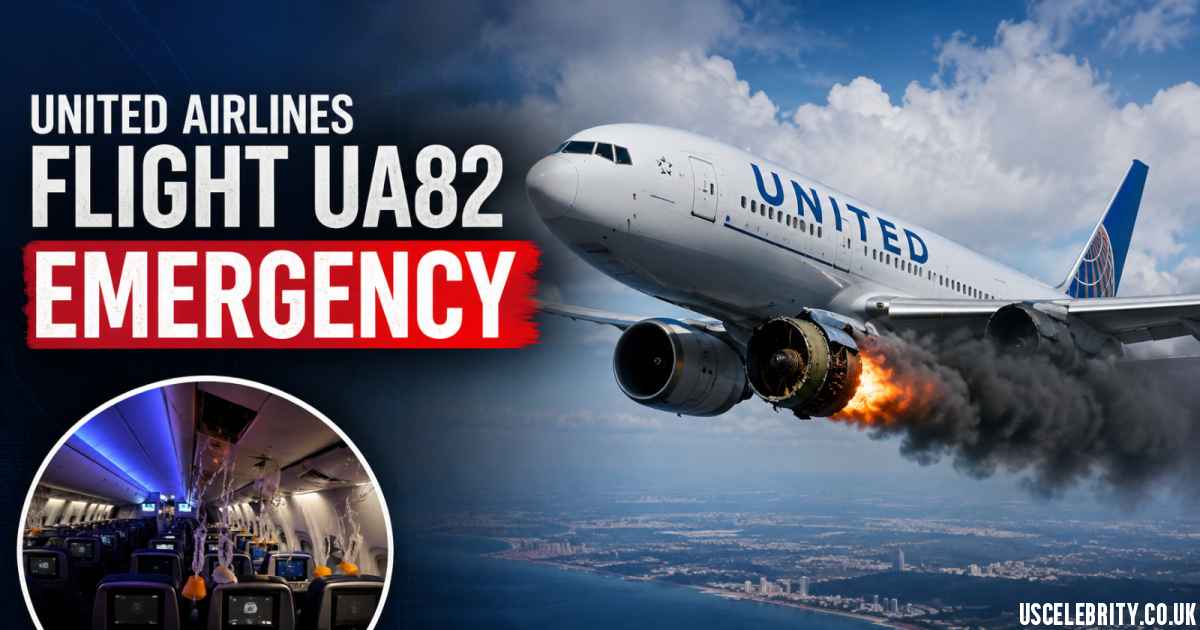
United Airlines flight UA82 emergency was one of the most watched Boeing 787 Dreamliner aviation incidents of recent years. The United Airlines flight from Newark Liberty International Airport (EWR) to Indira Gandhi International Airport (DEL) in New Delhi, scheduled for July 7, 2025, was aborted due to a critical failure of one of its systems.
The event was obviously of concern to the passengers, but aviation professionals saw it as a great example of the safety systems in place on modern aircraft, highly trained flight crews, and the strict aviation safety procedures set by the Federal Aviation Administration (FAA), preventing accidents before they can even occur.
The aircraft landed without incident, with no apparent injuries and passengers were rerouted to other services. So, let’s take a look at the full United Airlines Flight UA82 emergency timeline, cause, investigation, passenger impact and how it could affect Boeing 787 operations in 2026.
|
Category |
Details |
|---|---|
|
Flight Number |
United Airlines Flight UA82 |
|
Callsign |
UAL82 / United 82 |
|
Route |
Newark Liberty International Airport (EWR) → Indira Gandhi International Airport (DEL) |
|
Scheduled Departure |
21:30 EDT, July 6, 2025 |
|
Actual Departure |
21:30 EDT, July 6, 2025 from Runway 4R |
|
Date of Incident |
July 7, 2025 UTC |
|
Aircraft Type |
Boeing 787-9 Dreamliner |
|
Aircraft Registration |
N23983 |
|
Serial Number |
60136 / LN 839 |
|
Aircraft Age |
4.8 years old — Delivered to United Nov 2020 |
|
Engines |
2x General Electric GEnx-1B |
|
Flight Duration Before Emergency |
∼45 minutes airborne |
|
Cruising Altitude Reached |
33,000 feet over Gulf of Maine |
|
Ground Speed |
∼500 knots before turnaround |
|
Emergency Code |
Squawk 7700 — International distress signal |
|
Cause of Emergency |
Electronics/Avionics cooling system malfunction detected by onboard systems |
|
ACARS Message Time |
01:46 UTC, July 7, 2025 |
|
Pilot Decision |
Return to EWR per ETOPS safety protocol for overwater routes |
|
Fuel Dumping |
Conducted to reduce weight for safe landing |
|
Landing Runway |
Runway 22L at Newark (EWR) |
|
Total Flight Time |
∼1 hour 45 minutes from takeoff to landing |
|
Landing Time |
23:15 EDT, July 6, 2025 |
|
Passengers & Crew |
Exact count not released; all accounted for |
|
Injuries/Fatalities |
0 — No injuries reported |
|
Disembarkation Point |
Terminal C, Gate C120 Newark |
|
Emergency Services |
ARFF on standby; not required to intervene |
|
Weather at Incident |
Clear, no contributing weather factors |
|
Airline Response |
Hotel, meals, rebooking on next Delhi flights provided |
|
Passenger Compensation |
Meal vouchers + accommodations per United’s Contract of Carriage |
|
Aircraft Status Post-Event |
Removed from service for technical inspection |
|
Investigating Bodies |
FAA, NTSB, United Airlines Maintenance |
|
Preliminary Finding |
Potential electronics cooling system fault — final report pending |
|
Related Incidents 2025 |
UA187 Johannesburg–Newark May 6; Lagos–Dulles Jan 24 |
|
Significance |
Demonstrated 787 safety systems + crew training on long-haul routes |
|
Current Newark–Delhi Ops |
Route remains active with 787-9 fleet in 2026 |
Flight UA82 Emergency Timeline: From Takeoff to Safe Return
The emergency with United Airlines Flight UA82 occurred after take-off from Newark.
The flight took off from Newark Liberty International Airport around 9:30 PM EDT on July 6, 2025, on a Boeing 787-9 Dreamliner en route to Delhi for what was supposed to be a 14-hour straight flight.
Approximately 45 minutes after takeoff, as the aircraft was climbing through some 33,000 feet over the Gulf of Maine, pilots became aware of an issue with the aircraft’s electronics cooling system.
The flight crew took the problem seriously, and immediately started to review procedures and communicate with the United Airlines operations and air traffic control.
The crew declared an emergency at about 02:15 UTC on 7 July by switching to the internationally recognized code 7700 as used by aircraft around the world.
The Boeing 787 stopped its ascent and turned back to Newark under emergency rules, before beginning fuel dumping to lower the aircraft’s landing weight.
The plane landed safely on Runway 22L at Newark Liberty International Airport at about 11:15 PM EDT, about two hours after take-off.
Some major milestones were:
| Time | Event |
|---|---|
| 9:30 PM EDT | UA82 leaves from Newark for Delhi |
| A 45-minute after takeoff electronics cooling system problem was detected. | |
| Emergency, squawk 7700. | |
| A few seconds later, Aircraft reverses course and spills fuel. | |
| 12:15 AM EDT | Safe landing at Newark |
| Post-landing | Passengers safely disembark at Terminal C |
The return was orderly and controlled, with aviation emergencies managed by following procedures and not panicking.
The Flight UA82 was turned back
The Flight UA82 was returned
This was due to a problem with the electronics cooling system within the aircraft, a key system used in modern airliners.
The Boeing 787-9 Dreamliner, N23983, is a sophisticated aircraft with a lot of electronics systems on board to run the plane’s navigation, communication, flight controls and life support systems. These systems produce a lot of heat and have to be constantly cooled in order to function safely.
Avionics equipment can overheat and potentially impact critical flight systems if cooling is interrupted, impacting pilots throughout their flight.
The plane in question was a fairly new General Electric GENX engine-powered jet about 4.8 years old.
The fault was sent automatically via the Aircraft Communications Addressing and Reporting System (ACARS) to the maintenance team on the ground, who could start investigating the fault immediately.
For a long haul flight over the oceans and far-flung regions, it would have created an unnecessary risk if they continued with the problem of cooling the electronics, industry experts said.
Many aviation experts commented on the wisdom of the decision to return, and its full compliance with international safety standards.
United’s Emergency Response and Passenger Support teams
United Airlines’ emergency response and customer care mechanisms were switched on after Flight UA82 had landed safely.
No special assistance was needed for passengers to get off at Terminal C. United promptly started making alternative travel arrangements to Delhi, in addition to finding overnight lodging.
The airline provided:
- Hotel accommodations
- Meal vouchers
- Flight rebookings
- Customer service assistance
- Real-time travel updates
United Airlines also kept passengers informed on its digital platforms and flight status tools as they went through the process.
“A company representative said:
Our flight crew was very professional and acted very quickly; we are impressed by their safety and are very pleased with them.
The affected Boeing 787 was taken out of service until it can be inspected and evaluated.
Many travellers recognised that communication was good and professional during the incident although this caused disruption for travellers.
FAA Investigation and Technical Review
After the emergency return, two investigations were launched by the United Airlines maintenance crew and the Federal Aviation Administration (FAA).
The review was based on the following key questions:
- What was the cause of the cooling system failure?
- Was the problem isolated or was it a symptom of a bigger problem?
- Were maintenance procedures carried out in accordance with all requirements?
- Do other Boeing 787’s have similar issues?
The investigations included the analysis of maintenance records, onboard system data, ACARS transmissions, and crew reports.
As at the start of the review period there were no immediate operational restrictions on United’s Newark–Delhi service and the airline was operating the route with other aircraft.
The FAA had authority to expand its investigation if it “was suggested that there is a concern with the fleet, as a whole.
As airlines keep opening up more routes to foreign destinations, the investigation demonstrated the growing regulatory interest in state-of-the-art aircraft systems.
Here are some examples of similar incidents and the Boeing 787 Dreamliner Safety Record
But despite all the headlines about UA82, the Boeing 787 Dreamliner is still one of the world’s most popular and safe long-haul aircraft.
The monitoring systems used in the aircraft are sophisticated and are specifically designed to detect anomalies early, so that crews can take action to preempt a problem from becoming an emergency.
Among the significant 2025 Boeing 787 events:
| Date | Flight | Issue | Outcome |
|---|---|---|---|
| 20250124 | United 787-8 Lagos–Dulles | Technical issue and turbulence | Returned safely |
| The undecided technical emergency that forced the United convoy to return to Newark has left the broadcaster bewildered.The undetermined technical emergency that compelled the United convoy to head back to Newark has left the broadcaster bewildered. | |||
| July 7, 2025 | United UA82 Newark–Delhi | Electronic malfunction (cooling system) | Safe return, no injuries |
Electronics cooling failures continue to be very rare, according to aviation experts.
The UA82 event showed how robust the layers of safety are that are within the system, such as onboard diagnostics, automated alert, maintenance coordination, and pilot decision making.
Check out what to do in case of in-flight emergencies as a passenger
Incidents such as UA82 may seem alarming, but experts stress that commercial aircraft flying is built to be redundant and risk-averse.
The following are some of the key lessons that have come out of the event.
Emergency Declarations Are Precautionary
Emergency does not imply a crisis of emergency. It enables the air traffic controllers to give direct routing and emergency services when necessary and let them prioritise the aircraft.
Squawk 7700 Signals Priority Handling, 7700 Signals Priority Handling, 7700 Signals Priority Handling
Controllers are able to immediately identify that the flight is of special interest or needs special priority access when they hear the pilot say 7700.
Passenger Rights Matter
If the flight experiences technical problems, an airline will usually offer some form of assistance, such as:
- Hotel accommodations
- Meal vouchers
- Alternative transportation
- Rebooking options
Follow Official Information Sources
Rumors from social media are not reliable when traveling during a disruption; passengers should trust the airline apps, official websites and FAA updates.
Delays were faced by the UA82 passengers, but the support measures from the United were effective in minimizing the impact of the delay.
The future of the Newark–Delhi route in 2026
Incidents such as UA82 are rare and United Airlines is still flying daily nonstop service between Newark and Delhi with Boeing 787-9 Dreamliners.
In the near future (2026), the following changes are anticipated:
- Ongoing FAA monitoring of avionics/electronic systems
- Conducted enhanced maintenance inspections as appropriate.
- Continued focus on predictive maintenance technology.
- Ongoing training of crew in technical anomaly response continued.
The accident will further strengthen aviation safety culture, not weaken it.
All the phases of the event – ranging from the fault detection to emergency declaration, landing, and passenger care – went exactly as planned.
Conclusion
The United Airlines Flight UA82 emergency is a stark reminder of the capabilities of current aviation safety systems to guard passengers in the event of unexpected technical difficulties.
On July 6, 2025, the Boeing 787 Dreamliner, flying from Newark to Delhi, reported an electronics cooling system issue and, with the crew having activated the emergency circuit (Squawk 7700), made a safe return to Newark.
Passengers were assisted and re-booking help was provided and investigators immediately started work on understanding the cause of the fault.
The event serves as a reminder for those who will be traveling in 2026 that, despite the potential for technical issues on any aircraft, rigorous procedures, advanced monitoring equipment, and well-trained pilots ensure that safety is consistently the top priority. UA82 proves the success of commercial aviation, one of the safest modes of transportation in the world.


Vance Baldwin: Son of Billy Baldwin & Chynna Phillips Living Outside the Spotlight

Jameson Baldwin: UK Entrepreneur & Company Director Profile

Brooke Michelle Baldwin: Journalist, Author, and Women’s Empowerment Advocate

Seana Crenna: Richard Crenna’s Daughter, Sepsis Survivor & Inspiring Advocate

In 2026, Sean Rashad is a voice behind “Out Of This World”, a Brother and a Podcast Co-Host.

Barbara Joyce Rupard: Life, Legacy & Connection to Roy Clark
-
 Celebrity4 months ago
Seana Crenna: Richard Crenna’s Daughter, Sepsis Survivor & Inspiring Advocate
-
Celebrity3 months ago
In 2026, Sean Rashad is a voice behind “Out Of This World”, a Brother and a Podcast Co-Host.
-
Celebrity4 months ago
Barbara Joyce Rupard: Life, Legacy & Connection to Roy Clark
-
Celebrity3 months ago
Robert True Houghton: The Life, Legacy, and Family Story Behind Kris Jenner’s Father
-
Fashion3 months ago
Chess Menswear: The Definitive Style Guide for Contemporary Men
-
Celebrity4 months ago
Valentina Marie Skelton Biography: Red Skelton’s Daughter, Artist, and Keeper of a Family Legacy
-
Celebrity4 months ago
Brent Power: Complete 2026 Biography of Steve Kanaly’s Wife & Ojai Ranch Icon
-
Celebrity3 months ago
Chris Rodrigo: The Father, Therapist, and Quiet Influence Behind Olivia Rodrigo