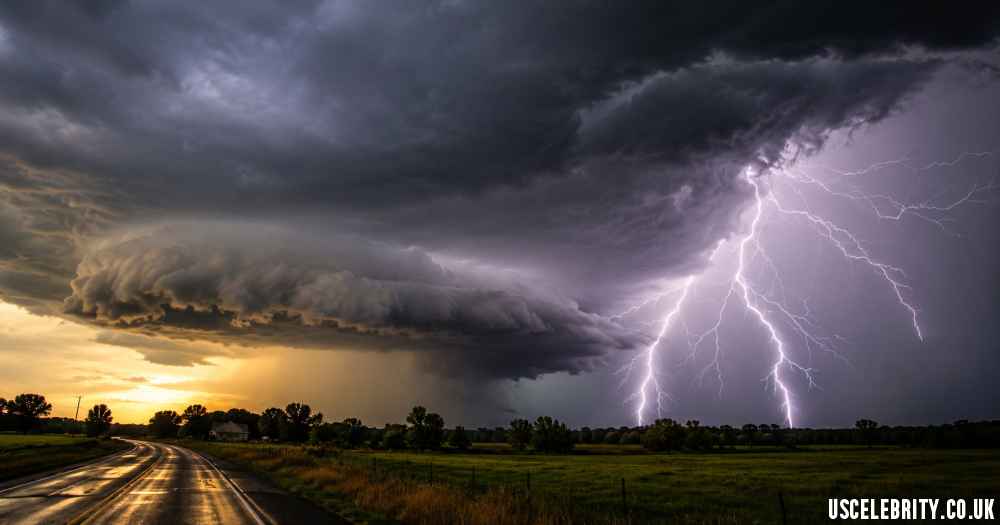
Multiple Severe Thunderstorm Alerts Issued for South Carolina Counties: In 2026, South Carolina has had a very active and busy severe weather season, with the National Weather Service (NWS) and the South Carolina Emergency Management Division (SCEMD) issuing severe thunderstorm alerts to dozens of counties. People have been warned of damaging wind, large hail, critical lightning, flash flooding and the possibility of isolated tornadoes from the Upstate and Midlands to the Lowcountry and Grand Strand.
Knowing which counties are being affected by the thunderstorms, what they mean and what to do in a safe manner is becoming more critical across the state. The purpose of this guide is to give you a comprehensive overview of severe thunderstorm season in South Carolina for 2026, along with which counties will be affected, potential severe weather hazards, safety tips and the outlook for the summer season.
Category
Details
Event Name
Multiple Severe Thunderstorm Alerts 2026
State
South Carolina, USA
Primary Hazard
Damaging winds, Large hail, Lightning, Tornado risk
Murrells Inlet to South Santee River; 30 knot winds
Coastal Impact
Myrtle Beach, North Myrtle Beach, Little River under warnings
Upstate Impact
Clinton, Woodruff, Lyman reported “yards like rivers”
Midlands Impact
Irmo, Red Bank, Lake Murray – Heavy thunder, downpours
Safety Action
Move indoors to basement/interior room, away from windows
High-Risk Structures
Mobile homes can be damaged or destroyed
Travel Risk
I-95, I-26, I-65 corridors in warning zones
School Response
Residents asked “What about the schools?” during alerts
SCEMD Campaign
Severe Weather and Flood Safety Week: Mar 8-14, 2026
Statewide Drill
Tornado Drill: Mar 11, 2026 at 9:00 AM
Alert Apps Asked
Residents: “What does everyone use for severe weather alert app?”
Storm Prediction Center
Marginal to Moderate risk Mar 15; Enhanced risk western SC
Radar Reports
Doppler radar showed rotation near Columbus, Bedford, Seymour
Official Source
weather.gov, scemd.org/prepare, iNWS Alert
Local Meteorologists
Ed Piotrowski WPDE, Chris Justus WYFF 4, Adam Clark WIS, Tony Chiavaroli, Dave Williams
Social Reaction
“The thunder rolls and the lightning strikes!” – Chris Justus WYFF 4
Keyword
South Carolina Severe Thunderstorms 2026
Search Terms
SC severe weather 2026, NWS Columbia warnings, SCEMD alerts
2026 Severe Thunderstorm Alerts for South Carolina Counties
Multiple Severe Thunderstorm Alerts Issued for South Carolina Counties
A number of NWS forecast offices, such as NWS Columbia, NWS Greenville-Spartanburg, NWS Charleston, and NWS Wilmington have been issuing severe thunderstorm watches and warnings across a large portion of South Carolina throughout 2026.
Frequently Impacted Counties
Central South Carolina
Newberry County
Fairfield County
Edgefield County
Saluda County
McCormick County
Aiken County
Midlands Region
Lexington County
Irmo
Chapin
Lake Murray Area
Pee Dee & Grand Strand
Horry County
Myrtle Beach
Conway
North Myrtle Beach
Socastee
Little River
Red Hill
Lowcountry
Berkeley County
Charleston County
Dorchester County
Barnwell County
Upstate South Carolina
Laurens County
Spartanburg County
Woodruff
Clinton
Lyman
During March 15-16, 2026, SCEMD received a Storm Prediction Center (SPC) outlook with a marginal to moderate risk for severe weather for most of South Carolina. Heavy risk areas were in western counties close to the Georgia border and storms were forecast to occur during the late afternoon and evening hours.
May and June 2026 saw an increase in the intensity of storms. Notable examples include:
May 11: Warning for quarter-size hail and 60 mph winds for southern Horry County.
May 22: Severe thunderstorm WATCHES are in effect for Edgefield, Saluda and Newberry counties.
June 14: Warnings affected Berkeley County, Moncks Corner, Goose Creek and Summerville.
The following alerts illustrate how rapidly strong weather can move from county to county.
What type of hazards are likely with these severe thunderstorms?
The National Weather Service regularly identifies four dangers when they are issuing a severe thunderstorm warning across South Carolina.
Damaging Winds
The most common hazard is strong straight-line wind gusts.
Numerous warnings have contained radar indicated winds of 60 mph or higher that can:
Downing trees
Damaging roofs
Destroying outdoor structures
Widespread power outages are caused by this.This is what causes widespread power outages.
For instance, a warning that was issued on June 14 for Laurens County warning winds to approach 40 mph, while others issued stronger gusts.
Large Hail
There have been several hail-producing storms across South Carolina that have formed stone hail up to a 1″ diameter or larger, which is equivalent to quarter size hail.
Recent reports included:
Hail up to ¾ inch in size in Horry County
One-inch hail near the Columbia metro area
Large hail can cause damage to vehicles, windows, crops and roofing materials.
Isolated Tornadoes
A few of the 2026 storms had radar indicated rotation, making for greater potential for tornadoes.
Climate and weather conditions are closely monitored because tornadoes can form quickly as severe thunderstorm cells develop.
Lightning and Flash Flooding.
Lightning is one of the most dangerous weather hazards, as it is common and frequently occurs from the cloud to the ground.
SCEMD has issued numerous alerts about:
Intense lightning strikes
Torrential rainfall
Urban flooding
Road flooding in low lying roads
Rainfall can fill up drainage systems very easily and result in hazardous travel.
Marine Hazards
Marine conditions have been hazardous along coastal regions as well.
NWS Wilmington Marine Weather Statement boaters from Murrells Inlet to South Santee River issued a warning of:
Winds up to 30 kt
Small hail
Dangerous lightning
Reduced visibility
What is causing a number of alerts in South Carolina this year?
Severe thunderstorms are more likely to occur in South Carolina because of its geography and climate, particularly in the spring and summer months.
The 2026 season has been active due to several factors.
Stationary Fronts
A stationary front is frequently found between warm air and cool air masses in the Southeast, said meteorologist Tony Chiavaroli.
These boundaries can stall over South Carolina, setting up favorable conditions for:
Prolonged rainfall
Thunderstorm development
Multiple episodes of extreme weather.
Spring Weather Transition
This week, March 8-14, 2026, is the state’s annual Severe Weather and Flood Safety Week, which reminds the public of the higher risk of warmer temperatures and stormy weather.
When Gulf moisture interacts with surface heating, the threat for thunderstorms increases greatly.
Modern Doppler radar systems may be able to detect:
Rotation within storms
Damaging wind signatures
Hail-producing cells
This enables forecasters to warn people ahead of time, at an even faster rate than ever before.
Advanced radar technology has been used by the local meteorologists such as Ed Piotrowski (WPDE) and Chris Justus (WYFF 4) to give quick updates as storms form.
Real-Time Reports: The experience residents are having with 2026 Storms
Over social media and local weather services, residents have reported the “on-ground” effects of these extreme thunderstorms.
Grand Strand – June 14
According to Conway residents, conditions were:
The mini hurricane was right here, in Conway.
Reports included:
Powerful wind gusts
Continuous lightning
Torrential rain
Trees struck by lightning
Three inches of rain were reported at 5:15 PM in Goose Creek.
Laurens County – May 27
Meteorologist Chris Justus says:
Several thunderstorms with heavy rain and strong winds.
Residents posted pictures of yards flooded and standing water, along with one person saying, “Looking at the pictures of the standing water and flooded yards, I wouldn’t want to live there!”
My yard reminds me of a river.
Upstate – March 8
Heavy rains over Greer, Taylors and the surrounding areas resulted in:
Power outages
Hail concerns
Strong winds
There were also reports of pets’ being fearful of the thunder and the lightning.
Columbia Area – May 24
The rain was heavy near Chapin and Red Bank and matched the earlier prediction from the NWS, highlighting how well the NWS is predicting the rain.
Some of the common questions from residents were:
Which severe weather app is best?
“Will schools close?”
How long the warning will continue to be in effect?
During a severe thunderstorm WARNING, do the following:If a SEVERE THUNDERSTORM WARNING is issued, the following is what you need to do:
SCEMD is dedicated to three key principles:
Be Informed
Keep an eye on trusted weather information sources all the time.
Make a Plan
Be aware of which type of shelter to seek out before bad weather.
Build a Kit
Have emergency equipment on hand.
If a severe thunderstorm WARNING is issued:
Move Indoors Immediately
ABC 4 News’ Dave Williams, a Berkeley County resident, pleaded with the county to protect its residents:
Take shelter in an indoor location safely.
Stay away from windows and stay out of the sun.Stay out of the sun and away from windows.
The safest location is:
A basement
An interior room
The lowest level of a sturdy building:
Avoid Travel
Roads can be dangerous very rapidly for the reasons of:
Flooding
Falling trees
Flying debris
Keep Devices Charged
SCEMD recommends:
Fully charged phones
NOAA Weather Radios
Backup battery packs
Know the Difference
Alert Type
Meaning
Watching
Conditions are right for severe weather to occur
Warning
Severe weather is happening or is likely to happen.
South Carolina also had a statewide Tornado drills on March 11, 2026, to help residents practice emergency shelter procedures.
To receive official alerts for your county:
Emergency managers remind people not to exclusively use social media.
The following is a list of trusted alert sources:
NWS Columbia
NWS Greenville-Spartanburg
NWS Charleston
NWS Wilmington
SCEMD
Weather.gov
NOAA Weather Radio
Wireless Emergency Alerts (WEA)
Local meteorologists such as:
Ed Piotrowski
Chris Justus
Adam Clark
Tony Chiavaroli
also offer real-time radar and storm information.
Looking Ahead to South Carolina’s Summer 2026 Storm Season
Thunderstorm chances remain between 48% and 59% in portions of the state with rain falling between June 18-19, 2026 as forecasted.
Meteorologists expect:
A new severe thunderstorm warning is issued for additional severe thunderstorms.
Flash flood concerns
Frequent lightning events
Isolated tornado risks
Hot temperatures and ample moisture, as well as unstable weather, indicate that severe weather watches and warnings will be frequent this summer.
Conclusion
In 2026, the number of multiple severe thunderstorm alerts in counties across South Carolina shows that it is critical to remain weather aware and prepared. Communities throughout the state have been threatened by 60 mph winds, large hail, flash flooding, and isolated tornadoes from Edgefield and Aiken counties, out to Horry, Berkeley, Laurens, and Lexington counties. The National Weather Service and SCEMD remind everyone to be prepared, act in time, and use more than one way to get an alert. If a warning is issued, immediate shelter and adherence to warnings will make the difference. With the summer storm season in South Carolina continuing, it is imperative that everyone is alert, listens to weather forecasts carefully, and understands the potential for severe weather to develop quickly. The last thing anyone needs when thunder roars is to think about what to do to protect their lives and property.